
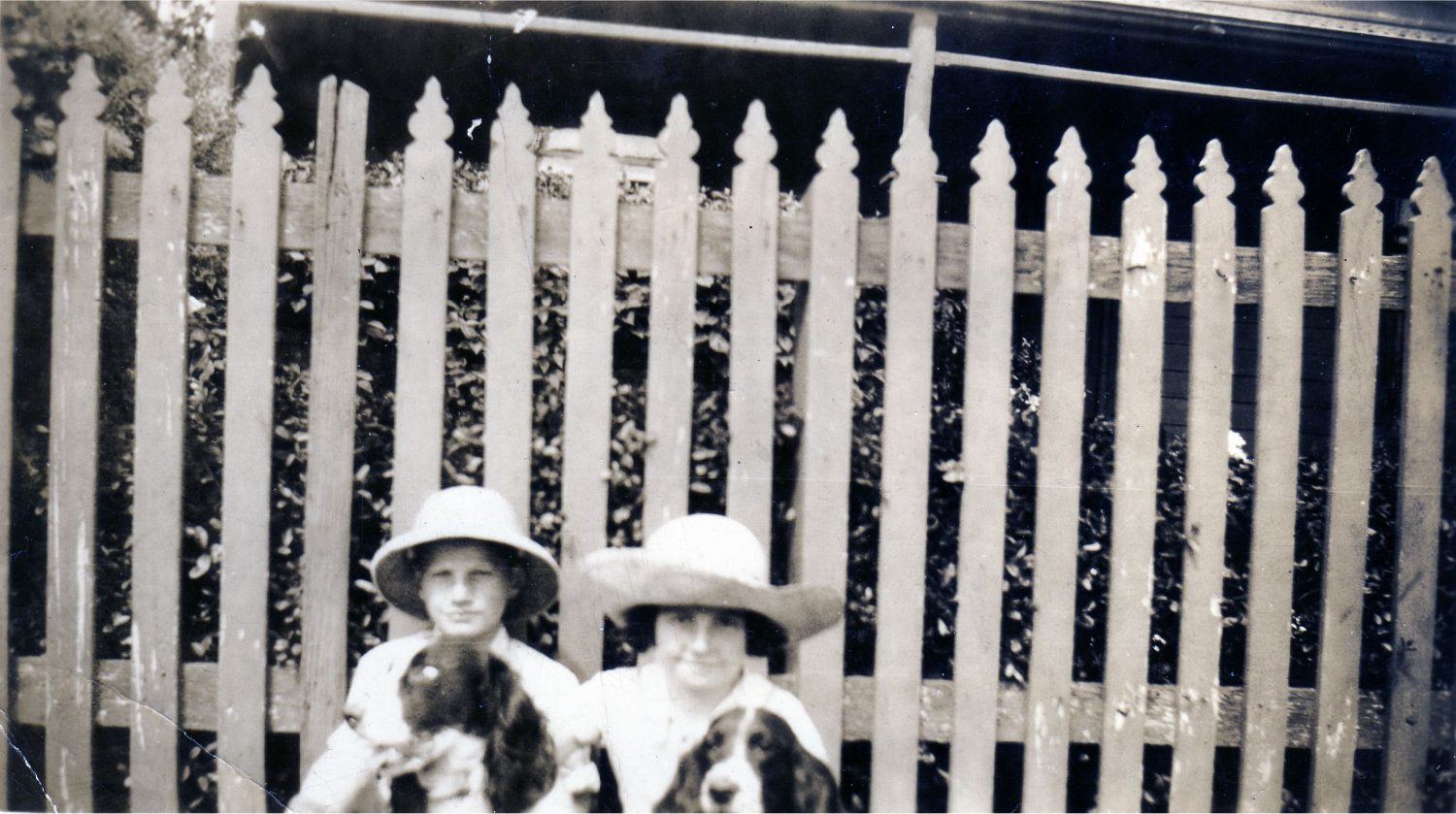
By the age of three or four, it was possible to wander around the neighbourhood and bump into other children that were playing on the street, and the search for a playmate became Shirley’s daily dedicated mission. Cars were still far from being the dominant vehicular species in Richmond, and the horse and jinker remained comfortably unremarkable bustling along capably competing with the impatient trams that squealed along tram tracks. Grimy pavements ran cluttered with grown-ups busily alighting on shop counters like bees on daisies, completing their daily errands. This maelstrom of inner-city life meant that the pockets of Richmond street children were mostly confined to a few corners of laneways and cracked nature strips to play.
Griffith Street offered something of a quiet haven from the packed main street, and Kenny and Lloyd Gill would often play in Shirley’s street, as their father owned the comic book store on the corner of Bridge Road. They soon became her solid childhood playmates. One of their favourite games was rolling up inside a large tyre while the others pushed it along the road. At the end, they would tumble out; dizziness making them shout and stumble hilariously. Then it would be the next one’s turn. Warmer days they would get some buckets from their own backyard and a few receptacles from the derelict yards around the street; fill them up with water, and create their own gutter raceway. Each competitor would find small twigs that they would tear apart, or a discarded match or two, and race them down the gutters for hours. Scoring the races became an issue sometimes, but usually it was Kenny who won – like he won most things
Kenny and Lloyd’s father owned the comic book store on the corner, and if you had two comics that were in good condition, you could swap them for one new comic. The store had a comfortable turnover, and alongside this exciting venture, Mr Gill worked another job as a grandly besuited doorman at The Windsor Hotel, and the lucky brothers were in charge of what was to Shirley, an imposing range of toys and collectibles that made her jaw drop whenever she went to visit. After chatting with the gregarious Mr Gill in the shop, respectfully examining the latest comic adventures, she would follow the boys through a chipped and battered doorway into the rear of the premises, where Mrs Gill would be preparing the evening meal or ironing on the bench. She was a friendly, ebullient woman, whose giant arms glowed red with the chores that she busied herself with. If they were lucky, she would let them eat the crumbs off the tray of cupcakes she had made for the weekend or send them on their way with an apple to play in their tiny, jumbled garden.
In a house a few doors down, there was another young girl called Margaret who was, infrequently, available to play. Shirley, upon spotting the rather shiny little girl a similar size to herself (albeit rosier-cheeked and more well-dressed) invited herself once or twice into their house to investigate their kitchen offerings. Her mother seemed somewhat distant and disapproving, and eventually the girl did not appear very often at all in the street. In desperation, when Kenny and Lloyd were nowhere to be found, Shirley would perch herself on the back fence of Margaret’s house chanting an invitation to her to come out to play. The girl rarely appeared. Instead, her mother, who eventually got tired of waiting for Shirley to cease her serenade, would bring out a Uneeda biscuit to bribe her off the fence and send her on her way. Food was always a compelling argument for Shirley, so she would leave with her treat, and go and sit in the gutter, waiting for someone to go by, or sit in her back garden and scratch swirls in the soil of the veggie patch.
The highlight of the day would be when the Rabbito would appear from down the lane, bearing his wares – calling out ‘Rrrabbitttssa! Rrrabbittssa!’. A gaggle of the aproned, worn-shoed mothers and grandmothers would hurry out of their houses with their dog-eared purses looking for a decent meal for the evening. Once or twice a week, extra excitement would occur when the Ice Man would arrive to deliver the ice for those lucky enough to have an Ice Box. Housewives would order a block the size they needed, and a posse of kids would wait behind the cart while the delivery man would hack into his massive blocks, splintering ice chips all over the cobblestones. Squealing children would race forward to grab whatever shards they could, then pop the special treat into their mouths, feeling the ice and specks of gravel mix together stinging their tongue. This was particularly delicious on a hot day – but an exotic novelty on any day of the year.
So, passed her early childhood. The best part were Sundays when some kindly relative may appear and bring a treat, or be the cause to cook one, or a picnic would be organised for a large group in the Botanic Gardens for some special family occasion.
The worst part was long hot or cold days in the house in Griffith St, with a rumbling in her belly, and a fight in the kitchen.
The lonely days grew into a sea of solitary wanderings. Before school began and then again in the interminably long holidays, every Friday, May would prepare a small paper bag for Shirley, containing a sandwich, a plum or apricot from the fruit trees in the back, and an old scone from the weekend to keep her going. At 8.30am sharp they exit the house, and leaving Shirley to sit in the gutter outside Griffith St, May in her finest clothes, fur wrap and hat, would give her a list of instructions about the day.
‘If it rains, sit on the veranda. If the Ice Man comes, tell him to come back on Monday. Don’t wander off past Bridge Road and keep out of Mr Smith’s way if he comes down the road in a drunken rage. Be a good girl and don’t talk to any strange men.’
It was a long day whilst Kenny and Lloyd, who were older than her by a year or two, were at school – but during the holidays they would appear later in the morning, to her great delight. The boys would go home for lunch and hopefully reappear. If not, Shirley would pluck flowers and daisies from the nature strip and nearby gardens and pretend they were her babies, setting up a house along the front of Griffith Street. She would have long and involved conversations about how naughty her children had been with the neighbourhood weeds. They were sympathetic.
Finally, her mother would appear later in the afternoon, when the cool breeze had become sadly insistent, and let her in to the stuffy house. At least it wasn’t long until dinner by then. Occasionally there were small, painstakingly wrapped parcels, but usually just May, feeling annoyed and out of sorts, and rushing to get the potatoes peeled for dinner.
On hot or cold days, it was a relief to get inside. Occasionally there would be a few beans to crunch on until the girls came in from work. Eileen would arrive first. Her work at the Rosella factory was closer. She retired to the lounge to listen to the radio before their father appeared. Lorna always seemed to bring some light with her when she got home, and the house was warmer when she was around. Dinner would mean that everyone had to pitch in and on the dot of 6.15pm, their dad would walk in, dissolving into the library. That was the cue for all the plates of food to be set on the table. They would sit down at the table, and a few seconds later Arthur would come down the hallway. Often, he would be heavy footed and there would be a smell of tobacco and beer on his clothes. Once he appeared, all conversation stopped, and they would sit in complete silence, only the chugging of the fire or the slamming of doors down the street would be audible. Scraping knives across simple plates, the family would gulp down the evening meal, eyeing off the last few slices of bread on the table. If the salt and pepper were out of reach, at first Shirley would point and ask for them, but very soon she realised all utterances were forbidden. A raised eyebrow, a pointed glance or nod in the general direction of the marooned butter or mustard was the Griffith Street dinner-time charades.
Any essential personal communication was saved for after the end of the meal, when Arthur would stand, murmuring some muted thanks before disappearing down the hallway to his books again. If any conversation was to happen with Arthur at the end of his day, it had to happen between the meal table and the library door. One had to trot alongside Arthur as he strode down the hall and ask for permission, or arrangements, or money very quickly – if the sentence was not finished by the time he got to the library door, it was shut in your face and the mission was a failure. Shirley never saw the inside of the front room for more than a glance her whole childhood. Occasionally, as the door slid open and Shirley happened to be able to make out the shape of the room in the gloom of bored shelves and neglected dust, she noticed vast stacks of foreign smelling books, lovingly tossed in arrant piles on tables and couches, while others sat immutable, stuck rock-like in orderly shelves, sleeping, neglected and sorted into history. It was a grey and hostile place, and Shirley went on to hate to smell of libraries her whole life
Shirley was somewhat terrified of her father, and yet at times he would sing to her and make a fuss of her, and spoil her by giving her a halfpenny or two to get some lollies at the milk bar. Usually he was at work, or in his room. It seemed to her that all fathers must spend their whole night and weekend, poring over large, yellowing books with smoky, frayed and forgotten covers whilst sipping port wine or tea with rum. Then, when she visited Lloyd and Kenny Gill’s house, she noticed that the only reading material there was in the shop out the front. Behind the scenes, there was not a single solemn tome to be found. Their father sometimes drank whisky or beer like all the men she knew, but he sat with his family after work and read the paper on the long summer nights when they played out of doors in the street. When they might pass by for a cool drink, Mr and Mrs Gill would be sitting together listening to the radio, talking, and laughing at a show, or doing the crossword together while Mrs Gill did some sewing.
It felt nice in their kitchen.
 Memoirs and Memories