Chapter 9 The Depression
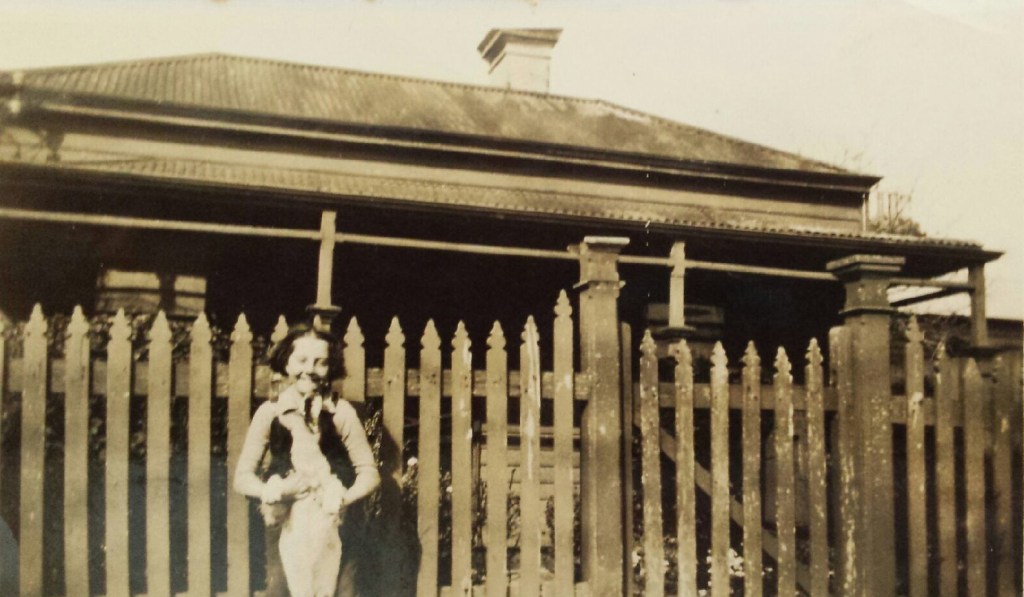
Life for the folk of Richmond in the first half of the twentieth century was often perched on the very fringe of poverty and destitution. One missed step – and your home, livelihood and scantily stocked kitchen table could vanish in front of your eyes. The worn-out, humble houses that were the only bitter buffer against such homelessness were dark and cold in Winter, airless and suffocating in Summer, and so cramped inside that most of their inhabitants on a sunny day, or warm evening, took the opportunity to escape the stale four walls, and hang over the rusting front veranda of the tiny terraces chatting with neighbours and passers-by for hours about all the news both inside their own homes, and inside others.
News mingled with gossip, both about the community and the nation, filled the streets, while children played in the gutters. By the mid 1930’s everyone had someone close to them who had lost their job and fallen on hard times. Relatives who were employed were expected to provide for those who could not provide for themselves, and new faces appeared in the street – both adults and children – who were the remnants of families who had been parcelled up and sent to live with cousins, grandmas, sisters or uncles with had enough food on the table, and a spare 6 by 3-foot space in a bedroom for a body to sleep.
It provided some excitement for Shirley to catch sight of a new face appearing down the street, and seeing them begin the walk out each morning dressed up in their best attire below clenched jaws in the apparent hope of finding work that day. Strange, glum children also appeared in the street, but they looked odd and out of place, and soon retired back inside their house with their ball or their comic.
In 1937, it was time for the Griffith Street house to take in a waif of its own. Shirley’s little bedroom was barely the size of a pantry and only had enough room for a bed; yet even it was a luxury for a destitute relative. Much to Shirley’s disappointment and gall, a young male cousin, James Kingsley Redding usurped Shirley from her minute, ‘barely a’ bedroom – relegating her to sleep, thanklessly, on the tiny kitchen couch.
Jim was a few years older than Shirley, and took little interest in her, which she returned in spades. It seemed he felt he was facing a great comedown in his status in life, so he rarely deigned to talk to Shirley out of either shame, embarrassment, disdain or just simple shyness. Looking uncomfortable and out of place, he spent a lot of time in his tiny room reading comics and counting his marbles, or went walking out of Griffith Street, returning many hours later just in time for dinner. His father visited most Sundays, and together they would eat lunch with May and Arthur, and then go for a walk to the park to get James out of the house. His father would bring a bag of lollies for his son as a special consolatory treat, and Shirley was greatly chagrined that she never got to so much as sniff one of those lollies during his whole stay, even though her uncomfortable nights on the couch should have merited at least a small tasting each Sunday. Eventually, Arthur got Jim’s father a job and the whole family moved to Windsor; Shirley rejoicing when she could move back into her own pokey little room again.
Chapter 10 Polio
In the November of 1937, a time of darkness fell on the streets Richmond, much like the war would in later years, but this time it was war with an invisible enemy. It didn’t have a nationality, nor was it centralised in faraway locations around the globe that only lived in black and white on the front of screaming newspapers. This enemy attacked the bodies of unsuspecting children and young adults, striking at random, and bringing down the healthiest in Richmond’s community.
Polio.
The name conjured up nightmare pictographs of children confined to beds, with their legs or arms, or both, stuffed into cruel splints. Large wards of them were captured crammed together, looking dolefully at tiny toys plonked on their bed to brighten up the shot. The papers were full of dire warnings, and growing concern until the outbreak was named an epidemic, and the schools were closed weeks ahead of the usual summer break. Children lurked around their homes, forbidden to leave or wander around the streets as they usually did. Even the swimming pool in Griffith Street had closed due to the panic. It was a long, boring and frustrating Summer spent trying to find something to do. When May sent Shirley to do messages up Bridge road, she stuffed her nostrils with cotton wool so she wouldn’t catch the deadly germ.
May decided that they would never get through the whole summer cooped up inside the house with Shirley, so plans were hatched to send Shirley away to the country for the Summer, where she could avoid the large crowds. In the bush, Polio might not have raised its terrifying hand against the innocent quite so savagely as in the seething slums of Richmond.

Dated September 9, 1937
Source: Trove 25/8/21 https://trove.nla.gov.au/newspaper/article/11091971
Chapter 10 Country relatives
May grew up the baby of a large Catholic family domiciled in the southeast of Tasmania, which was where she met Arthur working as a young, trainee shipping clerk for the Tasmanian orchard industry that practically ran the bustling town of Franklin. It was based on the majestic Huon River opposite the Herighty family home in South Franklin. Shirley grew up hearing the family legends involving the tribe of faded faces that sat on the mantelpiece in the loungeroom, and occasionally one of the phantoms would appear for a week or two for a visit, having made the trek to the mainland for a special event, or as part of their work. At regular intervals, May would announce that a new ‘present’ had arrived from her relatives – often her generous older brother – who was attributed with the gift of a very impressive fur stole (although Shirley suspected in later years that it was just rabbit skin) that was May’s pride and joy. Her mother would disappear down to Tasmania for weeks or what seemed, at times, like months to visit her relatives from the time that Shirley was around five. Letting herself in after various after school adventures, she would sulkily wait for one of her sisters, or her father to arrive home and cook her dinner. Even though her mother was often locked in her room for most of the day, the house still felt empty and cold when her mother wasn’t there, and Shirley took solace in playing with the radio and making a mess of her comics in the front room when she spent many hours alone.
And so that both Shirley and May did not go quietly mad during the polio isolation, it was arranged that ten year old Shirley would be sent to stay with May’s older sisters in Hobart and South Franklin. Shirley was quite fascinated at the idea of such an expedition and meeting the women who belonged to the blurred faces in the photos in her mother’s room. Early in January she was organised a passage on the overnight ferry to Devonport and was packed ready to go. A list of instructions on how to make the change from the ferry to the train, and where to wait after she had alighted the train in Hobart, were attached to her luggage. She was given two plum puddings and a few other small presents for her aunties, and as the mild January wind whirled around the blustery jetty, her mother gave her last minute messages before she boarded the rather rusty, enormous looking Bass Strait steamer Nairana, feeling very cold and tiny.
The rolling of the waves and the endless grey ocean seemed a very lacklustre start to the holiday. However, the ocean was reasonably calm, and after an exciting night in her very own bunk, and a packed breakfast with a glass of milk from the tiny cafeteria, a tall ship attendant walked Shirley to the directly adjacent train platform carrying her bag for her, and the final stage of her journey began. The tiny, shuddering train seemed to be filled to overflowing with mothers and fractious babies, and smelly men dressed in ill-mended trousers and oversized coats. Shirley crammed into a corner and tried to take an interest in the fields and cows outside the train window, until that became too monotonous, and she started counting each time she saw a cow or a sheep.
After what seemed an eternity, the little rickety cottages on the outskirts of Hobart appeared like stone flowerets on hilly green fields, and the train finally shuddered to a holt. Deposited on the Hobart Station platform clutching her bag and coat, Shirley felt bewildered by the crowd, but finally a kindly lady bustled up to her and took her hand. Her godmother Auntie Kitty Caine, a staid old chook whose husband had died before they had any children, greeted her with a big kiss and a dozen questions about how her trip had been. They returned to her house in a horse and jinker in a quiet outer suburb called New Town. Auntie Kitty’s miniature house was framed by an equally elfin sized front yard crammed with convivial looking flowers, and a wonderful smell of stew and cakes drifted from the pint-sized kitchen. Apart from luxuriating in the endless feeding times, including morning and afternoon tea, there wasn’t much to do in New Town. It was a sleepy hollow that echoed with brown bees humming, and the placid flapping of washing lines against geranium hedges.
Luckily, within a solid Richmond walking distance, lay a beach called Sandy Bay. When the sun came out and the temperature held a tinge of heat, Shirley would trek down to the beach and brave a swim. The harbour was so beautiful with the beating wings of seagulls framing the cerulean blue. The hills of Hobart in the distance were grey navy peaks sprinkled with picturesque houses ranging from tiny white specks to imposing stone mansions hogging the views. It looked so inviting, until her toes hit the crystal water and turned to stone. Not to be deterred, Shirley eventually completed an arctic swim and found a patch of beach out of the breeze to shelter in and try to raise her body temperature to an acceptable level, before walking home again.
They went into see Hobart city one day which to Shirley, accustomed to the squirming metropolis of Melbourne, seemed like a dowdy old country town with nowhere interesting to fossick around in. The highlight of the whole visit to Hobart was the fascinating tour of the Cadbury factory. Well, to Shirley ‘fascinating’ equalled ‘delicious’. There were great handfuls of chocolate available at the door and Shirley was almost giddy with sugary pleasure by the time the tour ended.
Next, she was sent down to Franklin, where her mother had grown up. She was to stay with May’s eldest sister Mary, who was a much merrier soul than Auntie Kitty and overrun with children and grandchildren. There was much more fun to be had there, and again plenty of opportunities to eat! South Franklin was beautiful. The gentle, rolling hills were capped by arches of lavish, dark-green trees overhung by an ever changing blue, grey, pink, and lavender sky that went on forever. An enormous river as big as the sea – the Huon- dominated the landscape and flowed by profoundly just across the road from her auntie’s and cousin’s house. Large boats and colourful barges ferried the orchards of apples and the Huon pine from the nearby forests, and small fishing rigs were always busy feeding the locals. There were glorious walks that she undertook with her cousin’s children. There were relatives everywhere! Auntie Mary’s daughter Rebecca lived next door, and they were always visiting and wiling away the summer afternoons riding the horses, playing cricket in the backyard paddock, or walking into town to buy a milkshake from the general store. Night times there were epic card games, where a box of matches became the currency of champions, and sly machinations of outbidding and out-bluffing opponents caused much hilarious chagrin. For a special treat on a Saturday, they would walk into town and go to the pictures at the Palais Theatre. It was a busy town, thriving even in the midst of the depression, and polio was a very distant threat indeed down on the Huon.
Rebecca’s two older boys Les and Phillip Oakford were particularly kind to Shirley. They were handsome young boys, and although too old to play with Shirley, they let her in on the cricket games with them sometimes in their enormous backyard.

The Huon River at Franklin, September, 2018
Some three years later Shirley was to meet her Tasmanian cousins again. Both Phillip and Les had enlisted in the navy and did their training at HMAS Flinders. Les, the older brother would spend his leave at Griffith Street, welcomed into the house by May and Arthur, as he was a bright young lad, with an easy smile and a very polite manner. He left to do his maiden voyage on the HMAS Sydney in and around the Pacific during 1940-1941. Arthur would read them extracts of the newspaper that spoke of the exploits of the Australian Navy, particularly HMAS Sydney. In the Spring of 1941, Les came off the ship and his brother Phillip got on. A few months later on November 19, 1941, the ship encountered ‘The Kormorant’ off the Northwest coast of Australia and was sunk with the tragic loss of all 645 souls on board. It remains Australia’s biggest naval loss of life, and one of its darkest days. May went to Tasmania and stayed for much longer than usual that year.
Tasmania filled up one summer. Later that year, Shirley ventured up on the train to Myrtleford to stay with her father’s sister Auntie Lillian. She was a dedicated single woman, who neatly managed Shirley’s day with dainty flower lined plates of toast for breakfast, and lunch pails left on the table full of jam sandwiches, and homemade cakes topped with icing. There were bags of fruit too. Nectarines juicy from the country sun, and melons dripping with sweet water and pips. The tiny cottage Auntie Lil lived in was ringed by a cheery flowerbed and trees that shaded the verandas keeping the high-country sun at bay. After a morning and early afternoon at the tiny local council pool, splashing and making friends with some of the local divers, Shirley would stagger up the main street in the blaring heat to her auntie’s shop, where the walls were stacked from top to bottom with what seemed to Shirley to be every imaginable fabric, thread, button, wool, haberdashery accessory and basic clothing item imaginable. Auntie Lillian served customers who stopped by for a long yarn or a hasty chat, with new stockings, lace handkerchiefs, packets of new buttons for a child’s dress, hooks and eyes, underwear or farmer’s work pants, while she deftly swung a large and well-worn timber ladder around the walls to the exact drawer or shelf that housed the sought-after items, clambering up the steps like a girl half her age. The owner of the shop was often in attendance supervising the register and writing up lay-by payments in a large, darkly thumbed docket book, and he would greet Shirley cheerily and invite her into the tea room for a drink and some Nice biscuits, which felt like the lap of luxury for her. The tiny tea room was usually cool and refreshingly gloomy after the bright sunlight of the main street and Shirley would busy herself there scribbling on old receipt books, or be tempted out to stand out of the way behind the counter while her auntie served the country customers, and introduced her niece to the friendly folk.
Occasionally, Shirley ventured out the back garden and down to the creek that ran through the rear of the town. The sun beat down through the shade of the trees, and when it touched your bare skin it almost sizzled as the heat greedily dried up the sweat beads, grasping at squinting eyes. Yet as soon as her toes touched the water flowing down from the Australian Alps, the hairs on her body stood back in horror, and she gasped through gritted teeth at the clear icy eddies. No matter how hot she was, she could only stand the water up to her thighs before she had to head out again and sit stinging on the shore, practising her rock throwing when none of the other village children were attempting the same suicidal idea of ‘cooling off’ in the deceptively pretty waters. The forest floor glittered around her with drops of scalloped sun, and the leaf spilt air smelt like it had been pressed from inside the trees through a sieve of wind. It was a beautiful place to visit after the grubby, grey of Richmond streets, and to be indulged with special treats to eat was always a sure way into Shirley’s heart. She loved visiting her Auntie Lil.
 Memoirs and Memories