Wanda Hurley, dating and enlisting
Towards the end of her first year of work, Shirley was invited to the social event of the year – Wanda Hurley’s 16th birthday party! Wanda Hurley was about as close to a beguiling, beauty goddess as it was possible for a young girl in Richmond in 1942 to be, and there wasn’t anyone who held the boy’s attention quite like her. In fact, anyone who was anyone from St James and St Ignatius was invited – not to mention the Children of Mary and the footy, cricket and water polo teams; some of them already budding soldiers and sailors lining up to do their bit for the war effort. The pre-party excitement was far reaching throughout the young Richmond community, and not many conversations with the boys at the corner of Highett Street and Griffith Street involved talk of anything else in the two weeks leading up to the big night.
Wanda seemed to emanate a mystery and glamour that was more than just her good looks. It was true that her hair was a flaxen white blonde; her satin lips curled up slightly where her dimples caressed the bottom of porcelain cheek bones; her large, pure-blue eyes were surrounded by an envy of black lashes, and her baby pink skin glowed with a halcyon freshness that emulated the movie stars who only dwelt ghostily on the screens at the ‘cin’. But even more fascinating for her admirers was that her parents lived in a posh part of Richmond where the houses dwelt further back into the wide, rose lined front yards, and there was even room for a shiny car in the driveway. She held a social power of privilege and the implied, mysterious luxury of wealth that was unheard of in the slums of Richmond, adding all the more allure and fascination to her larger than life aura. All the boys were sweet on Wanda, and whilst Lorna and Shirley, along with most of the other girls, secretly resented her, they were always jolly and polite around her in case they were excluded from whatever events she was central to, because all the handsomest boys shadowed Wanda Hurley wherever she went.
Lenny Voight was one of the jocular, local boys who had wooed Shirley at the ’Learn to dance’ and she found him great fun as he always made her laugh. He was a handsome young boy, easy to talk to, and a great footballer to boot. After asking Shirley to go to Wanda’s party with him, he picked her up from Griffith Street, talking excitedly as they walked along the streets of Richmond trying to keep warm in the Wintry air. Disastrously for Lenny however, he had recently taken up cigarette smoking with a vengeance, smoking at least three cigarettes on their way to the party and continuing almost non-stop once they were there. When the music started, they danced, but his breath nearly made Shirley sick. She couldn’t stand it when he leant over to talk to her and had to pull away from the stench of it. Shirley made her way to the other side of the room to speak to Lorna and her other girlfriends where she decided to keep her distance the rest of the night. It was then that she noticed Fred Milton glancing shyly at her. His dark ginger waves and his bright blue eyes were what impressed all the girls. Even though he was shy, he talked easily enough with the other boys there, and there was something kind and soft about his face that made Shirley feel soft inside too. It was effortless to ask him to join the throng on the dance floor. They spent the rest of the night dancing together; Fred had good rhythm and they swung around Wanda’s lounge-room with all the other couples in a warm haze. When they had a break for a drink, they had a great long chat, more than they ever had before. Fred loved the way Shirley laughed so vivaciously, and it made him feel at ease and comfortable around her. As for Shirley, Fred was a real good looker. He was shy, but when you got talking to him, he had plenty to say. They got along well and could talk about anything. He opened up around her.
At the end of the night, Shirley left Wanda Hurley’s party with Fred Milton, leaving Lenny Voight to chuff his own way home alone. Fred didn’t smoke and he was much nicer company anyway. He walked her home through the wintry streets to Griffith Street. As they neared the corner of Bridge Street, Shirley chirping away about the antics at the party, Fred passed his hand lightly across hers. They parted outside number sixteen and in his agonisingly shy way he asked her out the next week on Tuesday night. After that the only weeks they ever spent apart were the ones when he was at war. But all of that was still years away. There were plenty of dances to enjoy before then.
Shirley and Fred soon settled into a contented existence together going to the ‘Learn to Dance’ on a Sunday, and on any fine days there would be a picnic in the park or at the South Melbourne beach. Extra excitement came along when there was a dance at the St Ignatius, or at the St Kilda or Richmond Town Halls. Fred would occasionally come over for tea at Griffith Street and got along well with Arthur and May who thought he seemed like a neat, intelligent young man, and after a month or so, Shirley was invited home to meet Fred’s parents. Mrs Milton was a thinly polite, impressively checked-aproned matriarch. She was somewhat intimidating, and rarely included Shirley in any conversation. On the other hand, Mr Milton was warm-eyed and kindly, and always asked Shirley about how her week had been. Shirley was great friends with Thelma so there was always plenty to talk about with her at least. The younger two, Raymond and Joan, were chirpy enough, and they all appeared able to be quite benevolent to each other around the dinner table as conversation was allowed, which was always thrilling for Shirley to observe.
Life settled into an exciting new phase where Shirley escaped the drudgery of Griffith St and the inebriated yelling and fighting (or worse – silences) by going to work, spending time with Lorna or on dates with Fred. The war began to rage in the distant world around them but still seemed very far away. Rations, sock knitting, and war service became common everyday activity and terms. In many ways, her life opened up as a young woman during the war years.
Fred and Shirley became a regular couple around the circuit of dances and picnics. Fred wasn’t one for the movies, so when Shirley did go it was usually with Lorna and some of the other girls from the Children of Mary. She loved just sitting and talking with him and they could talk for hours about all the characters at work and at home, and the footy, even though he barracked for Melbourne and not Richmond. As for Fred, he marvelled at the way he didn’t feel shy or awkward around Shirley. When he was with her, he didn’t feel worried about anything he said, or how he acted. What limited attempts he had made at talking to girls prior to her had been agonising. Shirley just made him relax and come alive. She was always interested in what he had to say and how his day had been. All his little stories interested her, and he was able to share with her the feelings that he went through as a telegraph messenger when he had to deliver notifications to the families of those young men who had lost their lives in the war overseas. Merely a boy himself, he had no idea what he was supposed to do, even though the instructions he received in his position was to wait until the recipient had read the telegram to see if they wished to make a reply. He would hover in mortification as he was forced to watch the mother of a young boy scream in disbelief and shock at the news that her son was lost to the war. It was a trauma he would remember his whole life. His parents listened to his recounts if he wished to tell them, but when he realised that he would be joining these young boys himself soon, he preferred not to tell such stories, especially to his mother. Shirley would listen though and seem to be able to understand what it felt like to look into the eyes of those parents and hear the words of wracked grief that first escaped their mouths.

One day at the beginning of 1944 when they had been going out about 18 months, Fred suddenly announced that he was going to sign up for the Navy on his eighteenth birthday in the May. They were walking to his parent’s place for dinner when he blurted it out. Shirley had not asked him if he was interested in going to war for fear of what he might say, and Fred had not volunteered any hints about his feelings on the matter. As long as they talked about ‘white chooks’, there was nothing to worry about. However, the war was another story altogether. Suddenly her world seemed to collapse inwards and all the ways in which she had coped with the world, in its small and simple way, seemed to swirl away from her now. Her experiences had expanded outwards from the misery and quietude of Griffith St ever since she reached the days of finishing school and moving into work, and now Shirley felt sick that Fred was going to leave for who knew how long, and her world would be diminished once again back into the silence of the tiny kitchen behind the forbidden library.
Fred’s mother was absolutely appalled by the news of her oldest son enlisting in the war. The idea that her cherished first-born son could be exposed to any threat of death or injury and would be away from his home, with no idea when he was likely to return, seemed more than she could cope with. Sam, Fred’s father, still in his early forties, had been drafted to complete civil labouring service for he still had much to contribute according to the Australian Government. He’d started commuting up to Albury/Wodonga for two weeks at a time in 1943 to help build an airstrip. Now that Fred had announced he would be leaving the family home to complete his Naval training and she would be left to run the family on her own with only the teenage Thelma to help her and Raymond and Joan still children, it was all too much for Kate to bear.
This new change in the family’s dynamics, on top of her having to deal with her treasured son now being involved with a girl who seemed nowhere near good enough for him, threw Kate back into a very difficult place. Shirley tried her hardest to be a friendly, polite and acceptable girlfriend to Fred, and a happy friend to Thelma, but neither of these recommendations meant much to Kate. Her son was destined for someone much better than Shirley. In fact, he was too young to be throwing away his life and affections on any of the local girls at present, and she felt confident that the war would sort all this nonsense out anyway, so there shouldn’t be too much to worry about.
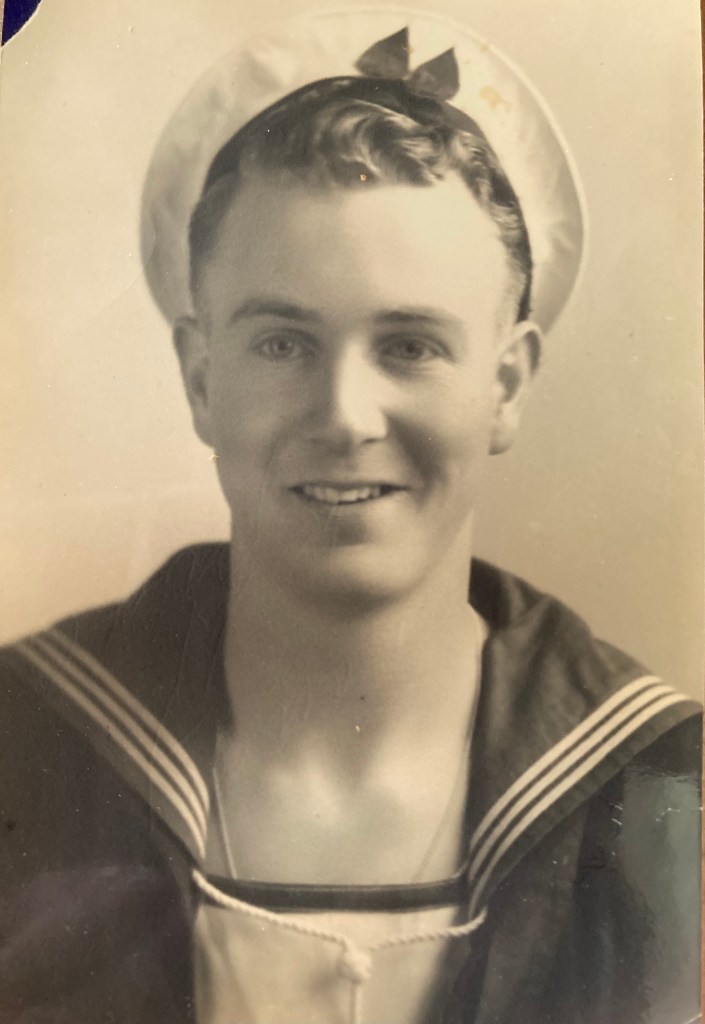
In May 1944 Fred enlisted in the Australian Navy, and with the war being on a messy but promisingly victorious pathway in the Pacific, the Australian Navy didn’t waste its time getting the young lads down to Flinders Naval Academy for their accelerated training, and after a couple of months it was time for a farewell dinner and one last walk around the Richmond Gardens hand in hand to say goodbye.

Shirley was reeling as most certainly it would be several years before she saw Fred again at best. In their too brief courtship, they had discovered a warm and wonderful togetherness where they could talk endlessly, laughing at the characters around them in the colourfully, grubby world of Richmond. Fred had bought her much happiness and hope for the future, amid the woes of Griffiths Street’s unfolding tragedies.
On his last weekend as a civilian, they walked home to Shirley’s after a dinner with the Milton’s and said goodbye with great sadness. It hardly seemed real, but it would still be some time before Fred’s last visit home. They both knew that things were changing between them for a long time, and though they couldn’t talk about what that meant, they clung to each other for a long time feeling bewildered by all the emotions that were swirling around them. It all seemed bigger than the two of them anyway, and out of their hands. Luckily, the next few months afforded them a few brief opportunities to catch up and spend a few, last precious moments together.
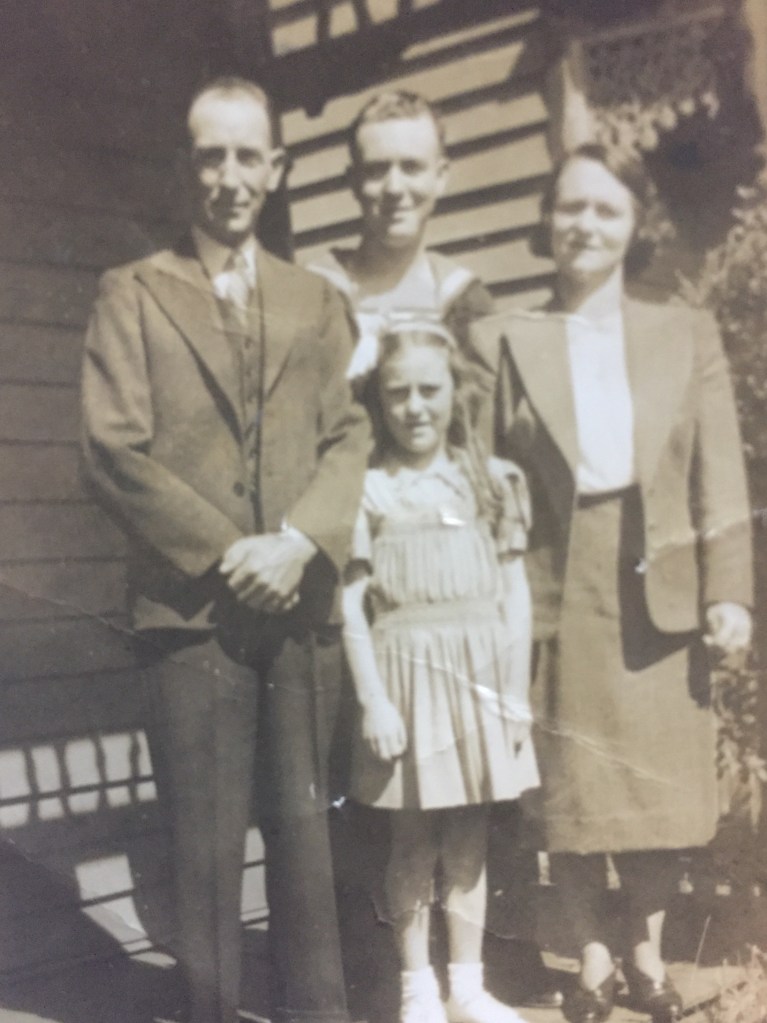
When the final ship out date arrived, Sam came back from Albury for the weekend and Kate cooked up the sort of feast that one was able to manage in the middle of rationing, and they had a jolly party. Her sisters Bonnie, Mary and Gracie came along with their families, and old Dan, her father, wasn’t to be left out either. Fred was his oldest grandson after all. Regrettably Dan always managed to spoil any dinner he turned up to, but all things considered he was well behaved this time. Kate’s sisters were in high spirits and only needed one or two shandies before they started singing ‘Knees up Mother Brown’ and ‘Danny Boy’ jigging around lifting their skirts lightly and showing their legs above their knees, much to the hilarity of the rest of the party. Rationing was probably curtailing Dan’s ingestion of sherry, so he didn’t berate the company as caustically as he usually did.
The next day Fred’s train left for Spencer Street at 0900 to join the HMAS Shropshire in Sydney, and while there were plenty of tears as the train pulled out, Kate chose to stand at another point on the platform near Shirley and even when Shirley attempted to acknowledge her, she seemed to look through her like a ghost. Kate was in shock, pale faced and bereft that day. It would be almost 18 months before either of them would see Fred again. It was the 4th of July 1944.
 Memoirs and Memories